
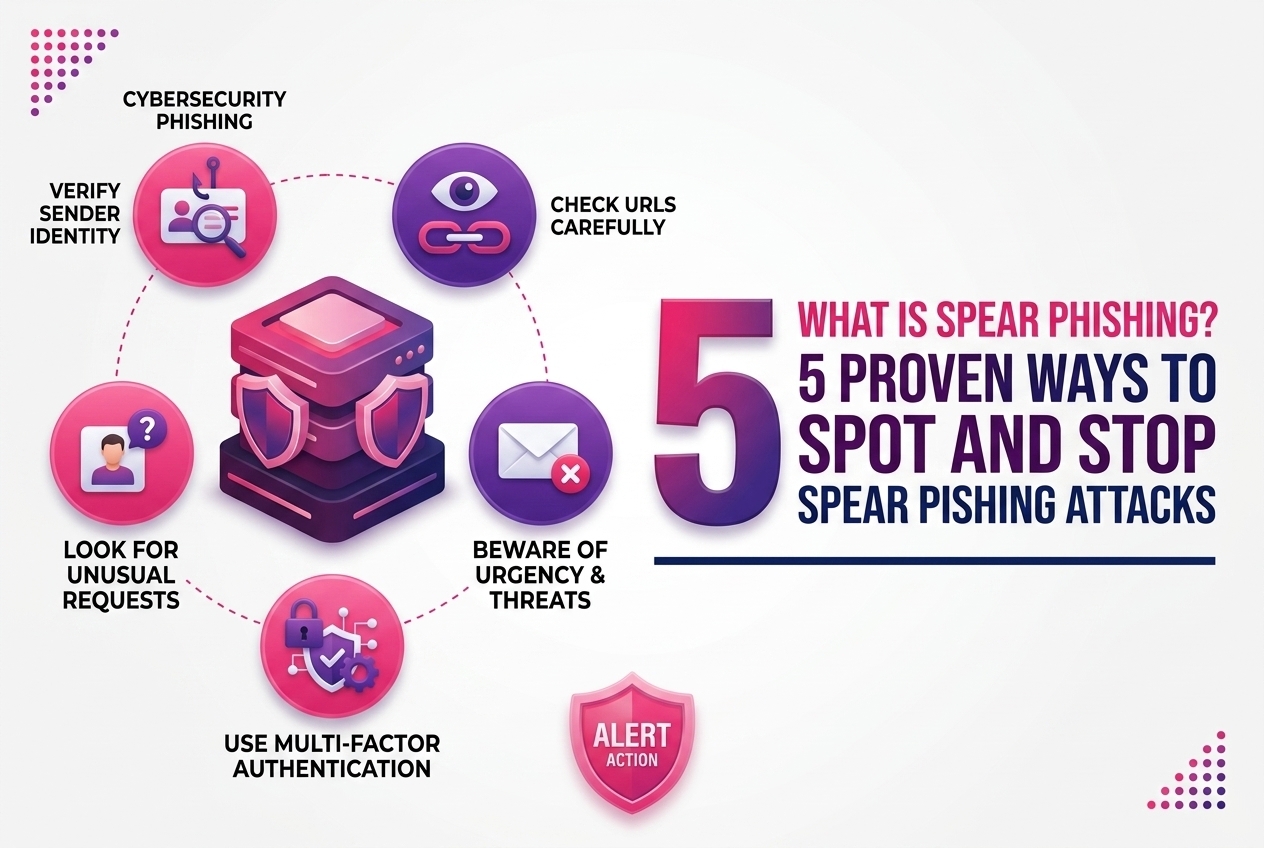
As cybercrime continues to rise, spear phishing remains one of the most effective ways for attackers to steal sensitive information. Unlike attacks and scams that target individuals, these attacks target specific employees and businesses. Often, it takes many forms such as invoice fraud, logging into accounts, and impersonation of an executive. That is the reason, spotting them is very difficult.
The better you understand how spear phishing works, the better equipped you’ll be to protect yourself and your business from these attacks.
What Is Spear Phishing?
A spear phishing attack is a form of online attack in which the hacker conducts thorough research regarding the victim and eventually scams the person through a deceptive email or message. By impersonating the CEO and creating fraudulent messages, the person can retrieve important information. Unlike normal phishing attacks, hackers use information that is gathered through multiple sources and eventually use it to target specific individuals.
Understanding how spear phishing works can help organizations recognize threats before they cause damage. The goals, methods, and targets must be recognized so that you protect the organization against any vices. The process typically includes:
- Researching the target’s personal or professional information
- Creating a convincing message tailored to the victim
- Impersonating a trusted colleague, vendor, or executive
- Encouraging the victim to click a malicious link or download an attachment
- Collecting credentials, financial information, or sensitive company data
How Do Spear Phishing Attacks Differ from Standard Phishing Attacks?
Standard attack is sent to a large number of people using the same random or generic message. But Spear phishing attacks are more targeted – feel more personal as if it was really meant for you and has details about that look quite legit. This makes spear phishing more convincing and increases the chances of someone falling for the scam.
One good spear phishing example is where an employee receives a seemingly legitimate email from the organization’s CEO. The email can either request an immediate transfer of money via wire or ask the employee for sensitive information. The fact that the email contains accurate information about the company makes the employee act accordingly without confirming the authenticity of the sender and content of the email.
Common Types of Spear Phishing Attacks
Cybercriminals focus on a certain goal and acquire information based on it. While most of them use personalised information, the methods might vary.
- Business Email Compromise (BEC): These are most costly forms of cyber attacks as it directly affects the organization. In this attack, criminals gain access and imitate an authentic email account to deceive the employees.
- CEO Fraud: Executive Impersonation could become detrimental for the company, as these messages often target employees in finance, payroll and human resource departments.
- Vendor or Supplier Impersonation: Organizations are connected to both vendors and suppliers, for this reason a cyber criminal can impersonate them to attain sensitive information. Banking details or payment information can both directly harm the organization.
- Invoice Fraud Schemes: The invoice fraud involves faking one’s identity. The attackers often study an organization’s purchasing habits as well as their billing cycles. Based on that, they generate a fraudulent invoice to deceive the employees.
5 Effective Ways to Identify and Prevent These Attacks
The attacks on individuals and organizations with personalized messaging are designed to get personal and public information. So be aware of the signs beforehand to minimize the risks of security breaches.
-
Verify Unexpected Requests
Attackers often create a sense of urgency to pressure victims into acting quickly. This quick action, without confirmation, could significantly cost the employee and the employer.
If you receive a request involving payments, password resets, sensitive documents, and/or financial transactions, make sure to always verify the request through a separate communication channel, such as a phone call or direct message. Independent verification can prevent costly mistakes and significantly reduce the risk of compromise.
-
Inspect Every Spear Phishing Email Carefully
A suspicious spear phishing email may contain subtle signs that something might be wrong or feel a bit odd. These allow you to suspect the problem there and then; protecting you from further attack. So, pay attention to:
- Unusual sender addresses
- Slight spelling variations in domain names
- Unexpected attachments
- Requests for confidential information
- Grammar or formatting inconsistencies
-
Spotting Indicators of Spear Phishing
Recognizing the warning signs of spear phishing can help you avoid falling victim to such attacks. These warning signs are all over the place, you must remain vigilant to these signs. These indicators include:
- Requests for sensitive information out of the blue
- Deadlines that require immediate action
- Bypassing of regular process flow linking to unknown sites
- Creating fear, pressure, or excitement
- If multiple indicators emerge at once, there are chances of a potentially malicious attempt being made.
-
Strengthen Cyber security Awareness
Cyber security awareness can be one of your most powerful tools against any kind of targeted cyber attack. Therefore, conducting regular training must be part of every quarter as a refresher. That enables workers to:
- Spot phishing attempts
- Learn about different types of attacks
- Report incidents quickly
- Verify sources correctly
-
Enforce Technical Security Controls
While human awareness is crucial, technology adds another important dimension of protection. The following are some recommended technical safeguards against spear phishing attacks:
- Multi-factor authentication (MFA)
- Email filters
- Endpoint protection applications
- Domain authentication technologies
- Security monitoring
Strengthening security practices is a key component of achieving and maintaining operational excellence.
Conclusion
When it comes to spear phishing, an interaction usually begins with an email that looks genuine, whether it’s from a colleague, supplier, or your boss. Even the sender may seem familiar, but in reality, it isn’t. A hacker starts it after spending sufficient time researching you and makes sure the email or the message seems convincing.
That is why you must have complete awareness and understanding of these sorts of attacks so that you can detect the signs of a spear phishing attack and protect yourself using adequate security measures.