
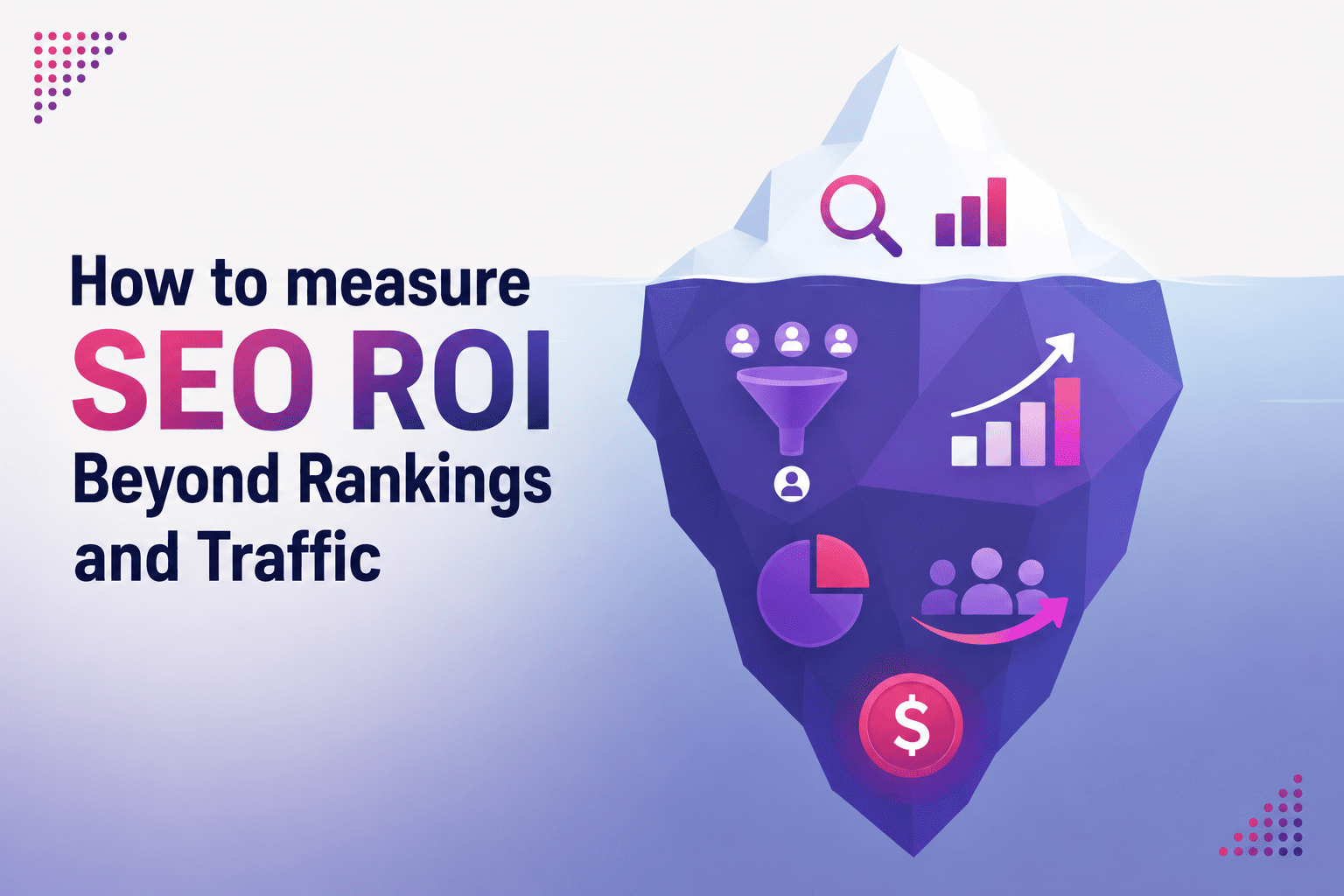
Businesses invest heavily in search engine optimization, but many struggle to determine whether their efforts are generating real value. Understanding SEO ROI is essential because it helps organizations connect their SEO activities to measurable business outcomes such as traffic, leads, conversions, and revenue. By evaluating performance accurately, companies can make smarter decisions, allocate resources effectively, and focus on strategies that deliver sustainable growth.
What Is SEO ROI and Why It Matters
The SEO returns are the profit made by businesses due to the success of their SEO strategies against the costs. This serves as a performance measure that links those processes with the business value.
Many large-scale companies measure this performance to know how organic search affects their income generation capabilities. Through calculation and evaluation, businesses are able to determine the strategies that work one hundred percent. For instance, activities such as optimizing content, enhancing technical SEO, and creating backlinks can reduce costs and increase growth.
How to Evaluate ROI in SEO Campaigns
Measuring performance effectively requires understanding ROI in SEO from both a financial and strategic perspective. It is not just about rankings but about how organic search contributes to business growth.
Key elements include:
- Organic traffic quality and volume
- Conversion rates from search visitors
- Cost of SEO campaigns
- Revenue generated through organic channels
- Customer acquisition efficiency
Organic Search Performance vs. Paid Advertising Returns
Both organic search efforts and paid advertising campaigns work toward generating leads and increasing conversion rates; however, the way they deliver ROI is different.
When implementing an organic search campaign, it takes some time before you see any results because you need to rank and build authority. On the other hand, you get instant visibility and traffic from a paid advertising campaign, and once your budget runs out, everything stops.
You can also explore social insights to discover how a social media audit uncovers audience behavior and growth opportunities.
How Organic Search Works
Organic marketing is based on establishing long-term visibility for the business. This is essentially done through non-paid channels that include SEO or content creation. It is one of the most sustainable ways to increase engagement and get content ranking. With organic marketing, the traffic is also organic, and the spending becomes less. This strategy delivers a lower cost per lead over time as well as helps the business in scaling.
How Paid Approach Works
Paid marketing is different from organic traction, as it relies on advertising channels. These channels include search ads, display ads, and social media platforms that allow the business to gain visibility. Rather than using organic tools that provide long-term stability, the paid ones are quick but highly unsustainable. They offer precise targeting and thus have quick scalability, but the cost of continuation is higher.
Understanding how there are differences in organic search campaigns and paid advertising is crucial when developing an overall ROI marketing plan.
Insights from SEO ROI Statistics
The present statistics reveal that search engine optimization is one of the most efficient marketing avenues available today. SEO provides better returns for organizations in comparison to other marketing tactics such as paid ones.
These findings assist marketers in setting reasonable expectations and achieving realistic results.
How Long Organic Search Growth Typically Takes
SEO is not an instant process. Results can only be realized after some time, as the search engine takes notice of quality, relevancy, and authority.
Timeframe considerations can be influenced by:
- Website authority
- Level of competition in the industry
- Website quality and content
- Health of the website
- SEO consistency
Challenges in Measuring SEO Return on Investment
SEO plays an important role but is not easy to measure. One problem is allocating credits for conversions from multiple channels. The user may come in contact with the brand many times before making the final buying decision. It becomes hard to measure which credit to assign to SEO and which to other means. Other elements like the seasons, competition, and market trends can also affect performance. Businesses should also stay aware of targeted phishing that can put marketing data and company systems at risk.
How to Measure SEO ROI Effectively
Looking at the challenges, many businesses struggle to measure SEO return on investment. The process involves tracking key performance indicators that connect SEO activity to business outcomes.
Important metrics include:
- Organic conversion rates
- Lead generation performance
- Revenue from organic traffic
- Cost per acquisition
- Engagement metrics
Role of SEO ROI Calculator in Decision Making
Calculator used for measurements helps businesses estimate potential returns before investing heavily in campaigns. It simplifies complex data into actionable insights.
These tools are useful for:
- Setting realistic expectations
- Forecasting growth
- Evaluating campaign success
- Improving budget allocation
However, for large scale businesses, a simple calculator does not work effectively. For this reason, they have to make use of the enterprise SEO ROI calculator as it is effective in simplifying the process of performance evaluation. It enables businesses to understand their return on investment and be able to determine where they stand, through complex calculations.
Building a Strong Measurement Strategy
To improve performance over time, businesses need a clear measurement framework that includes:
- Defined business objectives
- Consistent tracking of KPIs
- Conversion and revenue monitoring
- Regular performance reviews
- Continuous optimization
Future of SEO and Performance Measurement
The future development of digital marketing means that measuring performance will be more automated and data dependent. Businesses will increasingly depend on the use of analytics, artificial intelligence, and modeling to measure the success of SEO campaigns.
Through these developments, marketers will no longer depend solely on reporting but instead engage in making decisions. This will give organizations a competitive edge.
SEO ROI goes beyond rankings and traffic by evaluating how efforts contribute to real business value. Explore how AI for B2B is transforming strategies
Conclusion
To fully grasp the concept of digital performance, you should look beyond numbers and statistics. Companies that prioritize measuring success through proper assessment can benefit from sustainable growth by utilizing their organic search investments in an effective manner.